
This Time is Different
A Prayer for Stella Matutina, Where the Stars Are Twice as Numerous After the Singularity

One day will come you enter the cyberspace and you never, ever want to get out, cuz reality is shit, and cyberspace is God.
—Atari Teenage RiotWe’re in the endgame now.
—RuPaulWe’re not in Kansas anymore!
—Rand Paul
Is This Time Different?
The four most dangerous words in investing are “this time is different,” but the twelve most dangerous words are: “In investing, the four most dangerous words are ‘this time is different.’”
Earlier forms of technologically induced social upheaval catalyzed new forms of sociality in the shadows of their heavy machinery. During the Industrial Revolution, for example, the architecture of the factory floor helped catalyze the invention of labor unions. The proximity of dangerous work, combined with periods of temporary respite, churned up impassioned discourse that eventually took on new organizational forms.
In our era, the tightrope walker so delicately balanced between social and technical freedoms is starting to look a bit wobbly. From where I sit, as a relatively extroverted person who organizes and frequents events around the world, both for business and for fun, it appears that we are increasingly behind the eight ball when it comes to inventing social forms commensurate with our technical epoch.
As you know, when it’s good, serendipitous social interaction with other people is one of the absolute best things life has to offer. Picture where you met your partner, how you met your best friend, that trip you took, the fabulous Michelin-starred restaurant you booked months in advance, or the wacky hole-in-the-wall shop you stumbled into just to get out of the rain. But it must also be acknowledged that the surface area a given person has for experiencing these immensely rewarding interactions is shrinking.
Compared with the guaranteed mid-level fulfillment—midfillment?—of scrolling one’s personalized feed, going out into the world in search of social interaction with other humans is considerably higher-risk. The potential for bad chat lurks around every corner, and the alternative is as easy as reaching into your pocket. So one must ask: as valuable artifacts in their own right, do community and sociality have what it takes to resist the onslaught of the social-media dopamine drip, drip, dripping?
Maybe I shouldn’t worry. IRL is currently attempting a comeback and humanity’s instinctual drive towards relationality will find a way. It has before.
But that which could not be replicated yesterday is being replicated today. And whereas we could previously count on our all-too-human drives—namely, social and sexual ones—to push up through concrete sidewalks and make cracks in even the most coercive forms of control, today I am worried that things might indeed be different.
Dead Horse Control Society
Let me explain what I mean by “count on social and sexual drives.” To do so, I need to invoke what is by now a very dead horse (beaten to death by overeager grad students): the distinction between Foucauldian disciplinary societies and Deleuzian societies of control. I will keep this as short as I can.
As you likely know, the French philosopher Michel Foucault mapped a historical transition from societies that exercised power in a sovereign manner, typified by the king’s right to put his subjects to death, to societies that exercised power in disciplinary and biopolitical ways: by creating norms and enforcement mechanisms that kept subjects living and economically productive. Whereas sovereign power took the death of the political subject as its domain, biopower and disciplinary power took the subject’s mode of life, and biological life itself, as their objects.
In 1990, Gilles Deleuze updated Foucault’s model in a short essay of his own. Taking into account the increasing role of computers and information in society, he noted that just as disciplinary power no longer required a sovereign to declare “Off with his head!” in order to function, control no longer required the enforcement of norms through things like panoptically induced guilt or shame.
Think about it like this: first, a grocery store installs a camera and stops needing the security guard outside because shoppers police themselves under the electric eye. Then the grocer stops needing the security camera.
For Foucault, the camera becomes unnecessary when the shame of surveillance is internalized by a population that begins to enforce the norm upon itself. You think: I wouldn’t want Becky from down the road to see me steal a grape from Whole Foods!
For Deleuze, all this human emotion sure is a lot of fuss. Soon it becomes technically unnecessary. Now the grocery store has micro-cameras that track you taking the grape and automatically add its cost to your credit card statement. You didn’t break the law, because the law simply enlarged to encompass your action and render it economically productive. You are free to act as you wish, just as we are free to encode your actions in data—that’s the deal!
When I say that we used to be able to count on people’s sexual and social instincts in previous eras of rapid technical change, what I mean is that no amount of power—whether through repressive force or guilt-inducing norms—could eliminate the inbuilt sociosexual drives of our animal being, or those drives’ relationship to the discovery of new forms of expression and spaces of freedom.
What I worry about today is that those bastions of our animality are nowadays realistic sources of alpha to be encoded and turned into the profitable activity of buying a grape. How, for every organization seeking to preserve the luxurious friction of human relations, there are an order of magnitude more Silicon Valley-backed startups that see financial promise in encoding what has never before been possible to encode.
Note: I’m never interested in the paint-by-numbers word association of “X is doing a control society; therefore, it’s a Bad.” My point is that zones where socialization used to hide out—counterculture, rebellion, guilt-free pleasure-seeking—are, while readily available, no longer representative of any kind of escape from the present. The present wraps itself around these things: hello, Mr. Corporate Sponsor at the underground rave. You can’t even steal a grape anymore!
If spaces of radical social experimentation are what you’re after, our animalistic sociosexual drives may no longer be enough to create or preserve them. We may need to throw some gasoline on human creativity rather than leave socialization for instinct to sort out.
The Appendix of Purpose
So now I come to Stella.
You can read a bit more about the who and what of Stella in excellent pieces written by friends here and here. Both are rightful and good descriptions of Stella’s existence and its potential.
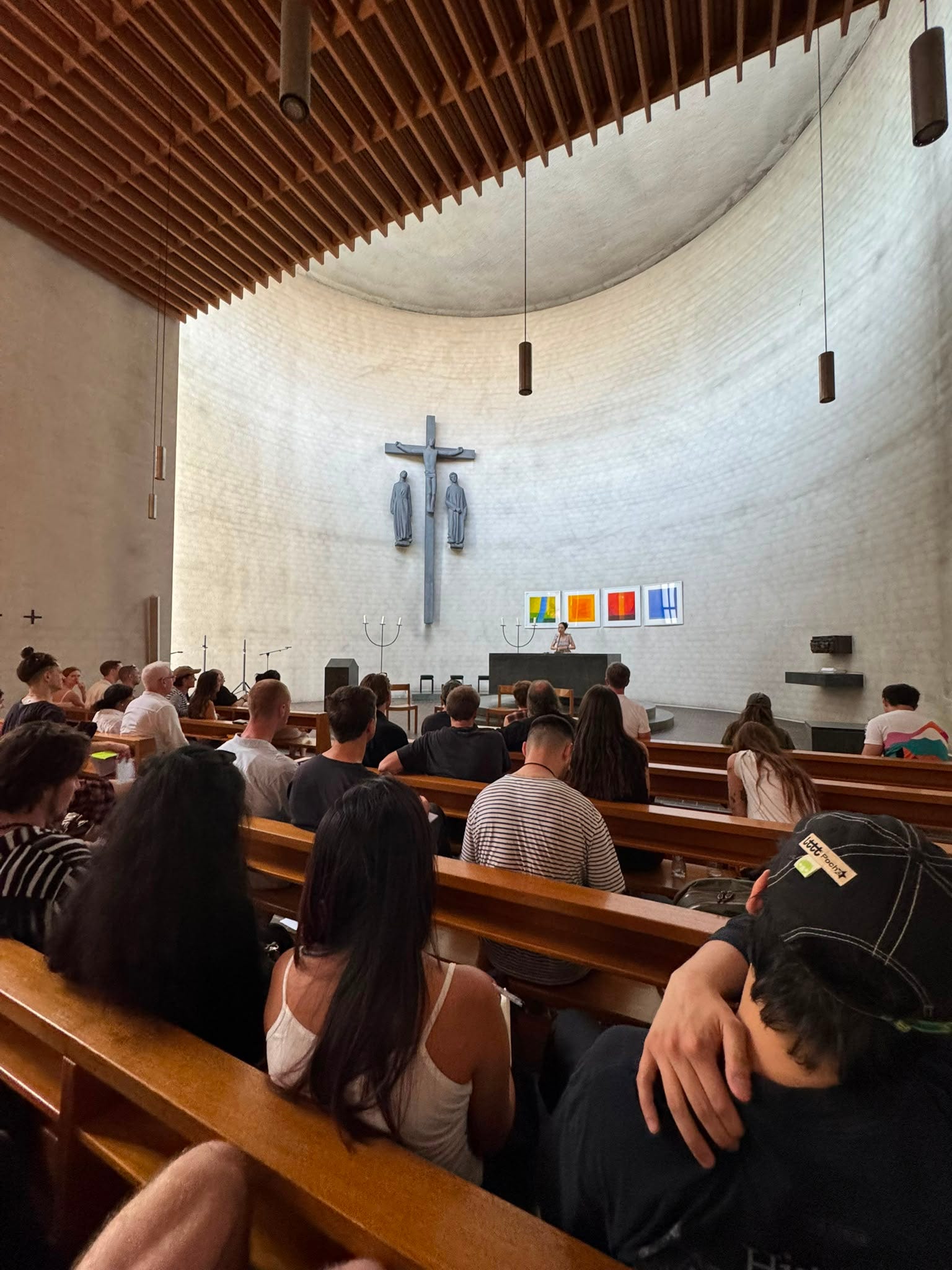
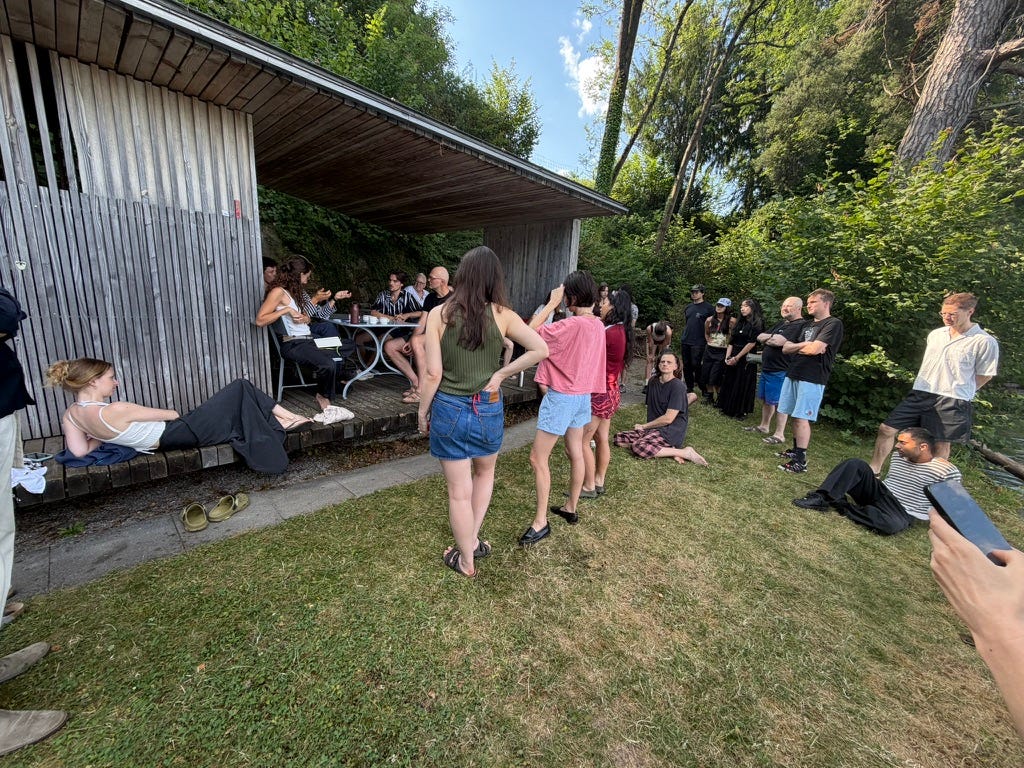
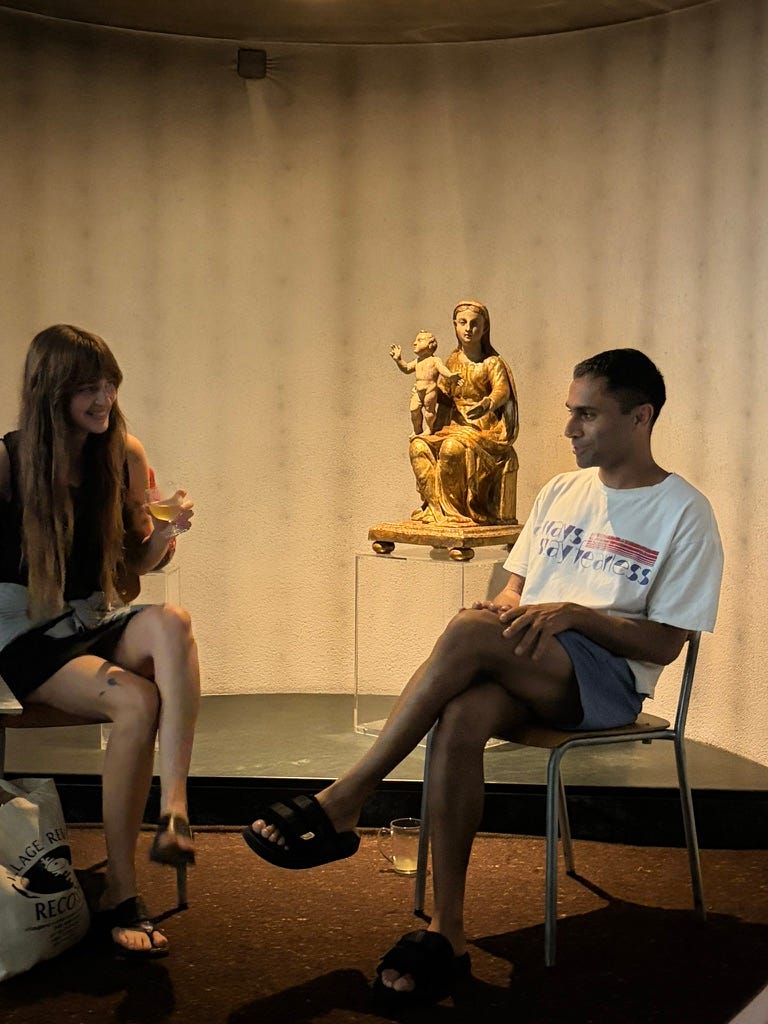
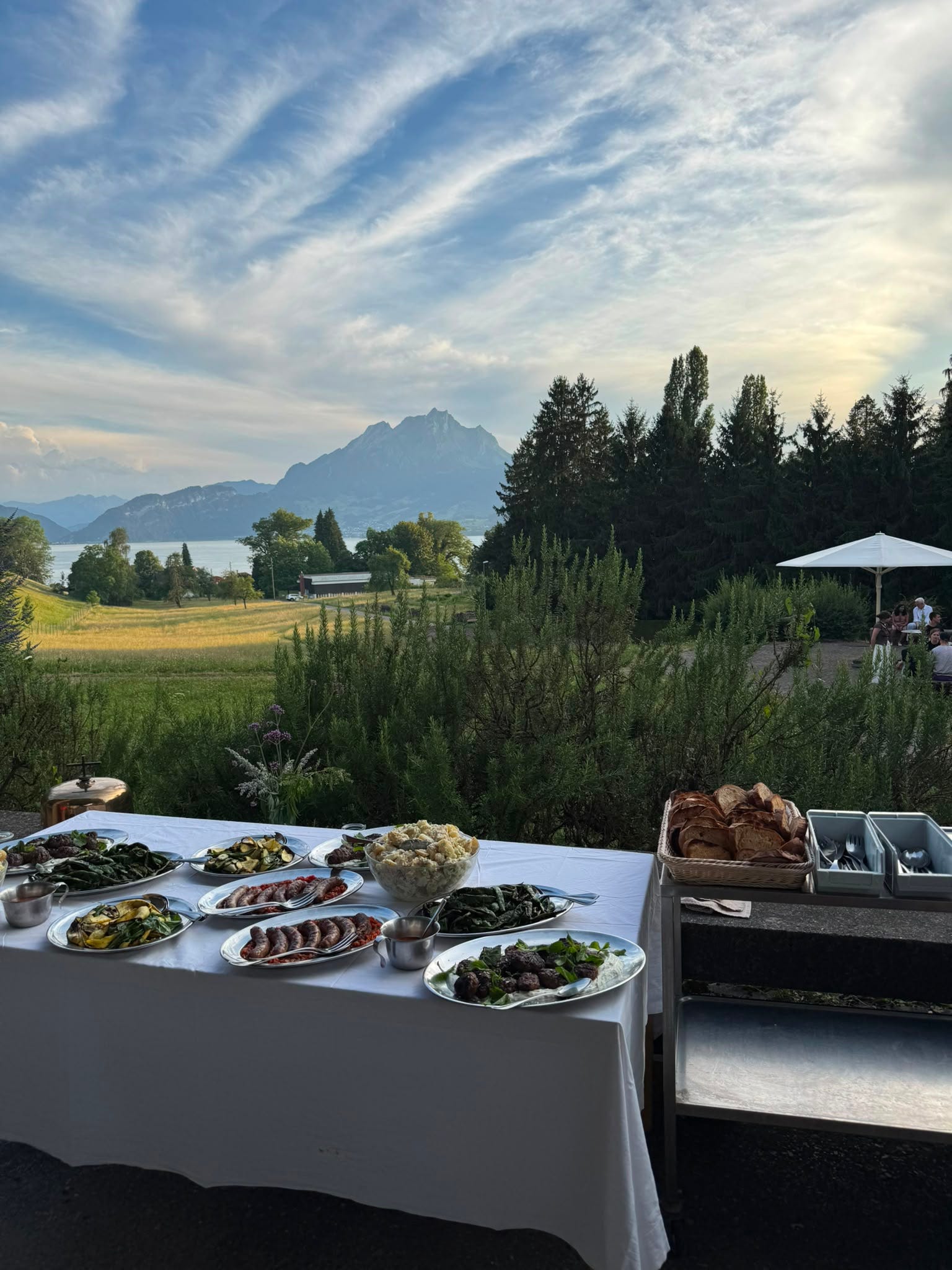
Stella Matutina is indeed an old Bauhaus-style nunnery set on the shores of Lake Lucerne, and it is, more than anything else, breathtakingly beautiful. Others have focused on and photographed what is currently happening at Stella, as it traipses into this larval period of its new existence.
I’m interested first in what happened before this. One thing that certainly happened is that nuns lived at Stella! Nuns, who, famously, are self-declared exiles from the world of human desire in favor of the pursuit of spiritual enlightenment. All this time I’ve been speaking about human desire as a possible defense against technical control’s incursion into social life—and nuns were living at Stella! Are nuns the answer to AI?
If the purpose of a thing is indeed located in what it does, Stella’s purpose for years could be said to have been the renunciation of earthly human desire in homage to a higher power.
Now the contradiction comes into focus: on the one hand, the renunciation of desire and pursuit of spiritual enlightenment represented by Stella’s monastic history; on the other, the self-given mission of arts and tech to reorient the culture of AI.
Each imperative potentially poses a serious danger to the other. This is precisely Stella’s opportunity, and that of other site-specific organizations seeking to intervene in the production of culture surrounding AI.
When I was there, the question of what Stella was for, post-nuns, was alive in the air. The answer I offered focused on what makes Stella different from any other arts-and-tech residency. Veterans of Antikythera, Strelka and ToftH were in abundance, so you can imagine that we had a great deal to say—and feel—about this.
At the time, I suggested that what differentiated Stella was its ability to bring together, IRL, a scene that exists primarily as an invisible college threaded together by projects, papers, residencies, Instagram posts, small gatherings and flights home.
Stella gathers this scene of similarly interested but otherwise dispersed people under its very literal roof. It gives them the opportunity to engage with one another not merely as avatars of this project or that, but as members of a community as such. Not just a scenius—my adored term for a scene that mutely articulates itself through the excellent works of outstanding individuals—but a real community one can point to at specific times and places, whose character and spirit can be identified.
That was my first impression of what Stella could be. I stand by it, but after some reflection, I think I undersold the importance of Stella’s monastic history and astonishing natural beauty.
Post-AGI IRL IG IDK

In a place as beautiful and quiet as Stella, what does one need?
In this Calypso of a place, an afternoon swim in the lake is enough to erase all memory of home. Ironic, then, that an arts-and-tech scene so focused on what it and the world lack should arrive here.
A picture starts to form: Stella is an analogy for humanity post-AGI, enacted in real time.
There, whether you call it utopic or dystopic, people are experimenting with conditions of post-scarcity abundance alongside human irrelevance.
No one needs to do anything at Stella. One can bask in the beauty all day and seek spiritual enrichment all night. And if one does nothing at Stella, the world will continue to turn, paying no attention to this little plot of lakefront land in Switzerland. This is like a microcosmic prehistory of a future in which it is no longer necessary for humans to participate in the manufacture of the future.
Why shouldn’t Stella be what the post-AGI future looks like? We sit around a lake and hang out. Maybe like AGI pets. Or maybe the machine god’s favorite cattle. In any case, it is worth taking seriously that here, time is out of joint.
The interesting opportunity lies not in how easily Stella could lean into becoming a full-on hippie commune, but in how this particular confluence of material conditions might allow it to function as a proto-political time machine: a way to travel to the near future and ask, in a world where human activity is pretty truly irrelevant, what really matters?
Stella is, in my ideal conception, a human freedom laboratory. It can serve as a site where we, as a species, act out answers to the real question that scares people about AI: Do we matter at all, and if we want to say that we do, what reason can we give for our mattering? This is the appendix to Stella’s purpose: vestigial but profound, real but not yet present.
Life in a Solved World?
A recent Vox article criticized the AI researcher and podcast host Daniel Faggella as an “AI successionist,” suggesting that what he desires is for AI to replace humanity. I don’t really see it.
To me, it is pretty clear that Daniel has developed his own answer to the question, Do humans matter in the face of AI? His answer is affirmatively yes. But it is not yes in the reactive sense of we matter because of some deficit in AI. It is yes in the affirmative sense: we matter because life matters, we are currently the emblem and avatar of life, and life is a valuable thing that should continue.
I find Daniel’s point of view quite humble, in fact, in its suggestion that life must be prioritized over individual survival, or even over the things we currently consider the essence of being human. This doesn’t mean that Daniel is interested in the extinction of the human race in favor of AI. It does mean that he is more flexible about what humanity might evolve into alongside AI as we work towards the continuation of life.
Daniel’s newfangled form of transhumanism is one answer to the existential dread wrought by the emergence of AI.
Stella offers another: in a world that is, as Nick Bostrom might put it, “solved,” what human elements are worth pursuing?
Blind hedonism is, of course, one answer that always gets thrown up, and sure, the monastery will probably get a dose of that. But Stella’s offering is an opportunity to invent new forms of human relation from the perspective of a solved world, and then propagate those forms back into a world that remains to be solved.
It is not enough to protest the capitalist extraction of value from counterculture or the rave. If one cares about those social forms—or social forms in general—one must go further.
At least for the moment, we’re in luck: there is still a gap between the moment of cultural invention and the moment when value can be spotted and extracted. Fixated on the steady states of how things are or have been, we underemphasize this interval of invention, the locus where Silicon Valley thrives, in which a new form exists but has not yet been fully recognized, priced or enclosed.
What I am suggesting is that the engine of sociality and human relationality could use a jump-start, and that sites like Stella ought to channel creative energy into new form factors through which we can experiment with how we want to live in a world filled with AI.
How to provide such a jump-start? I’m sure you have your own ideas, and you are welcome to disagree with me, but I think that if we want to bet on human sociality, one solid answer is organized and compulsory fun.
Autocracy of Fun
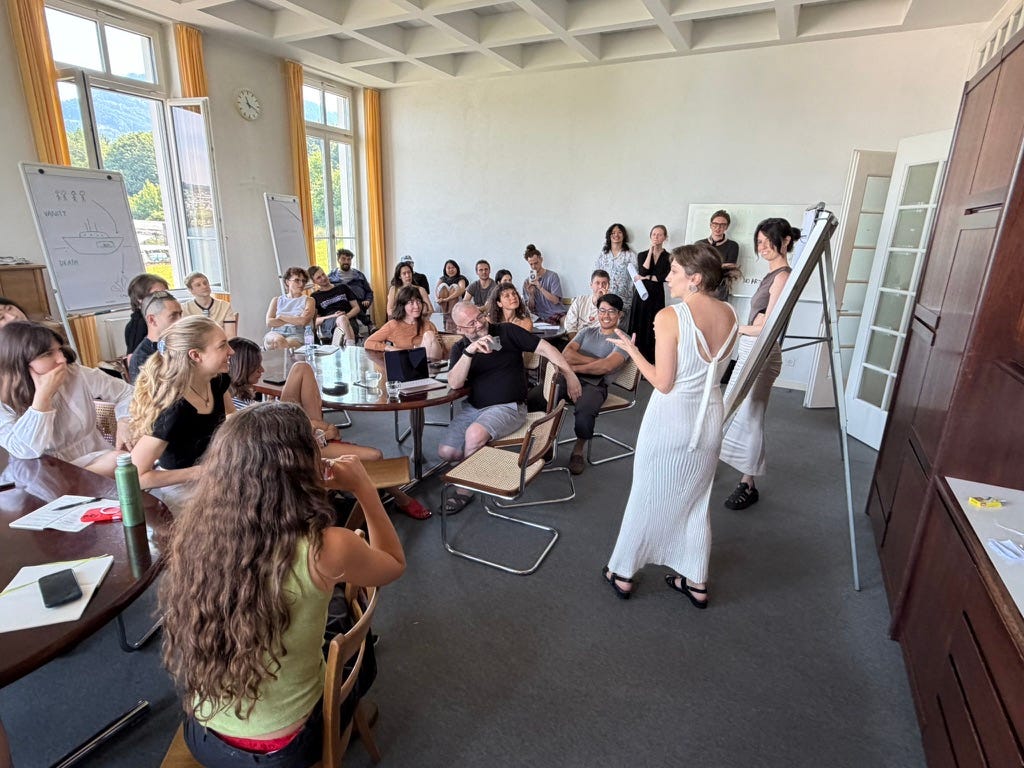
Organized and compulsory fun means new games, rituals and social activities that we might—read: must—play with one another as MacGuffins leading towards necessary forms of sociotechnical togetherness and experimentation.
In the abstract, I am speaking about new forms of play invented in the shadow of our technical era and distinctly marked by it. But as we know, these are no mere playthings.
“But William, it sounds like you’re just using fancy words to describe obligatory corporate team-building activities!”
Yes, it does. And yes, I (sort of) am.
That is because corporate team-building is the form factor that has best inherited the lessons of experimental art movements like the Surrealists and Situationists.
Oh, you disagree? Fine. Show me the parties you go to that force you to engage in strange forms of writing, or the hangouts that remap how you must interact with other people according to arbitrary rules and values. Yes, obviously corporate team-building implements these things in service of more shareholder-value-y ends. Fine! That does not disprove my point. If anything, it shows that I am doubly correct, given the enormous amounts of capital put towards these silly exercises. That outlay would not happen if they were entirely ineffective. You thought you were doing dumb icebreakers because they lost the company money?
My suggestion is that we not throw the baby of fun and social experimentation out with the bathwater of corporate team-building based on cringe vibe association alone. Rather, it is a worthwhile task to reclaim compulsory social experimentation from its sole possession by corporations.
Fortunately, we are not lacking in precedents:
After the First World War, the Surrealists developed automatic writing as a way out of the rational mind. Similarly, their Exquisite Corpse game transmuted the subject of creativity from an individual into a group.
When William S. Burroughs picked up the Dadaist technique of cut-ups—physically chopping up newspapers and other texts and rearranging them into new meanings—he did so as a way of breaking ordinary language, itself a control mechanism over what was thinkable.
In the 1950s, the Situationists turned cities into game space. The dérive meant wandering without destination and allowing the city’s emotional currents to determine where you went. The practice of détournement meant stealing advertisements, slogans and images in order to turn them inside out and against their original meanings. Algorithmic walks—predating Google Maps—took inspiration from this: take every second left; follow someone wearing red; walk towards whatever looks least inviting. The point was to jam the programmed experience of the city and produce a new one.
In the 1960s, the writers and mathematicians who founded Oulipo charted a path in the opposite direction, imposing ridiculous constraints rather than surrendering to chance: write a novel without the letter e, for example. Brian Eno’s Oblique Strategies built on this: a deck of cards containing arbitrary instructions, such as “honour thy error as a hidden intention,” that made obedience to arbitrary law a condition of freedom.
We have a decent number of popular games today that turn sociality into playful material: Mafia, so loved by Silicon Valley (see the Founders Fund games); murder-mystery dinners (thank you, Dan Humphries, for my first ecclesiastical example of this); Wall Street’s favorite, Liar’s Poker; and many more.
Less well-known examples include The Quiet Year, in which a group draws a map and narrates one year in the life of a community rebuilding after disaster. Future Backwards begins with a wonderful or catastrophic future and asks everyone to work backwards to explain how it happened. The Thing from the Future gives players random prompts and asks them to invent objects from societies that do not yet exist.
Playthings of the Future
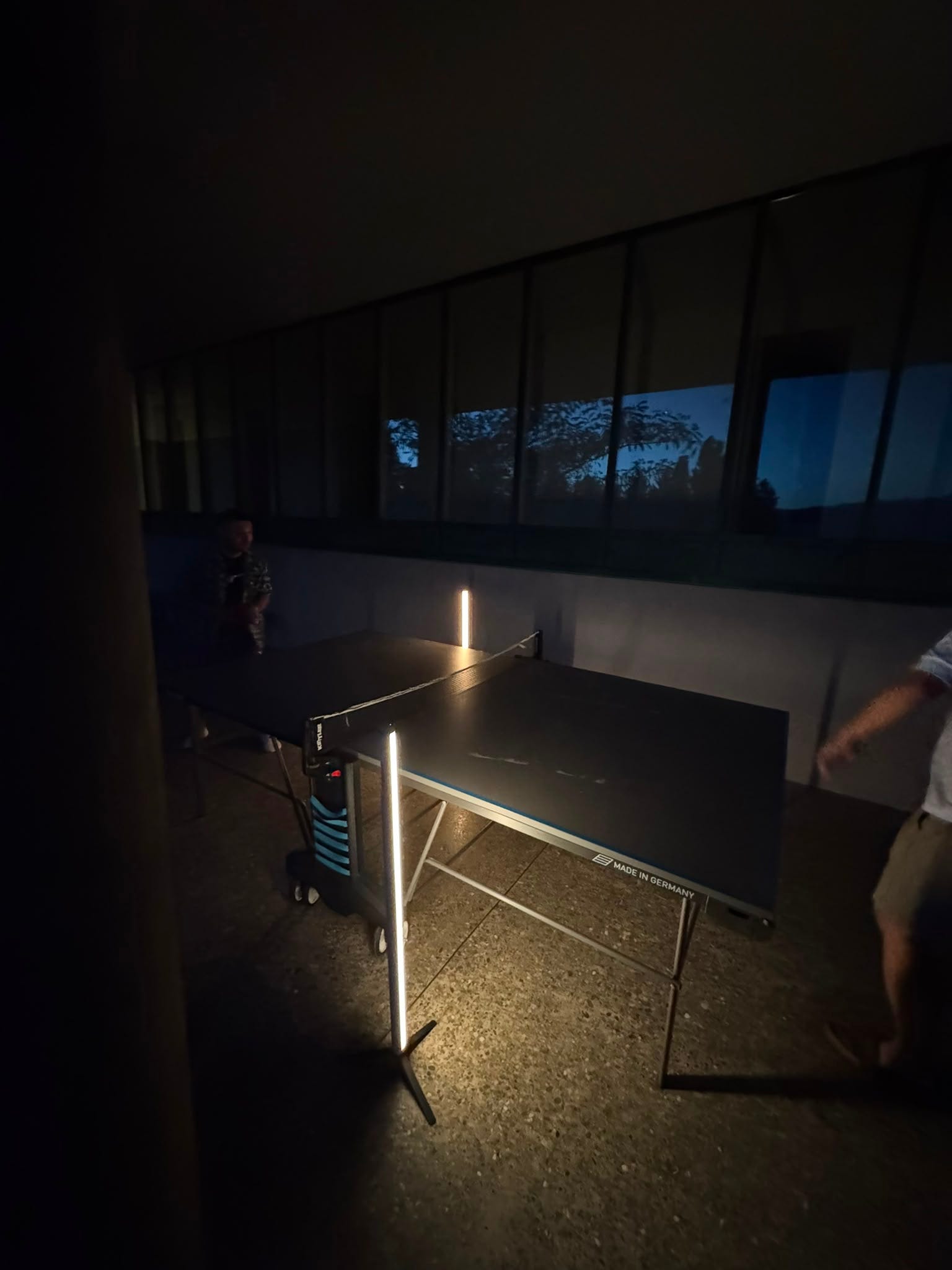
In their own ways, my friends Doug Stark and Will Freudenheim—and, well before them, Roger Caillois—have each made a case for the centrality of play and habit formation in the creation of new social rituals.
Doomsayers, in painting dystopian pictures of human irrelevance, constantly make the same mistake: they give machines unlimited runway for evolution while constraining humans to the status quo.
It is therefore obligatory, I think, for spaces like Stella to prototype new habits and forms of play that orient humans towards new forms of becoming and new worlds in which we might wish to live. The play and imagination we engage in presuppose the rules by which we wish to be constrained—and help dictate our co-evolutionary direction.
There is still time to bet on human ingenuity and the (re-)making of our importance to the next part of the technical future. If there were ever a moment to go long human creativity as a way of engineering an answer for our next chapter as a species, this is it.
It is time to double down.
So I have created a small list of new primitives for silly little games. It is just a start, and not really my specialty:
A New Constitution appoints a temporary committee and chairperson to decide the rights, powers and rules under which a society will operate. The committee and the rest of the group must then live under those rules for the next several days.
Institution Corpse applies Exquisite Corpse logic to organization-building: one person writes the purpose, another the membership, another the rituals, another the economics and another the taboos, without anyone seeing the whole institution until the end.
Temporary Liturgy requires a group to author a prayer, hymn or chant collectively, and then say or sing it together at regular intervals (like meals).
Mandatory Choir describes any synchronized collective activity—a choir, sermon, silent procession or 3 a.m. walk—that coordinates people in strange ways rather than merely gathering in the same place for the same reasons.
Maintenance Duets turn the work required to sustain a physical place—washing dishes, gathering firewood, preparing meals—into structured encounters. Following the example of Félix Guattari at La Borde, a given pair might receive roles: one person can only complain while the other can only ask questions; one must describe their bodily maladies while the other plays the thoughtful doctor; neither can discuss the task directly.
Blind Company applies the parable of the blind men and the elephant to company-building. Each person receives a different prompt and independently invents one feature of a product without knowing anyone else’s assignment. The group then reveals the pieces and attempts to discover the company it has collectively and accidentally designed.
Negotiation LARPs assign people incompatible interests within a fictional institution. One person wants to build a data center; another controls the land; another represents local residents; another needs the energy; another believes the whole thing is spiritually poisonous. They must negotiate an outcome under time pressure and then live, at least temporarily, with the institution their negotiations produced. A debate becomes more than a debate when its winning proposition alters the rules of the place in which it occurs.
A Vibe-Coded Microstate asks teams to build the software through which a temporary community governs itself: its schedule, chore system, ceremonies, treasury or currency. A local currency might reward washing dishes, teaching a workshop, filing a patent or organizing a service in the chapel.
At the more absurdist end, the Rock Moving Game simply requires a group to move a rock under arbitrary constraints: the rock must travel in a circle, yet no hands or feet can touch it. Only one person can make contact with the rock at a time. The rock must visit a body of water before midnight. Why would anyone do this? Because the rules say it must be done. The absence of instrumental justification is the game: can arbitrary rules produce mythology and shared meaning around pointless acts?
Coda
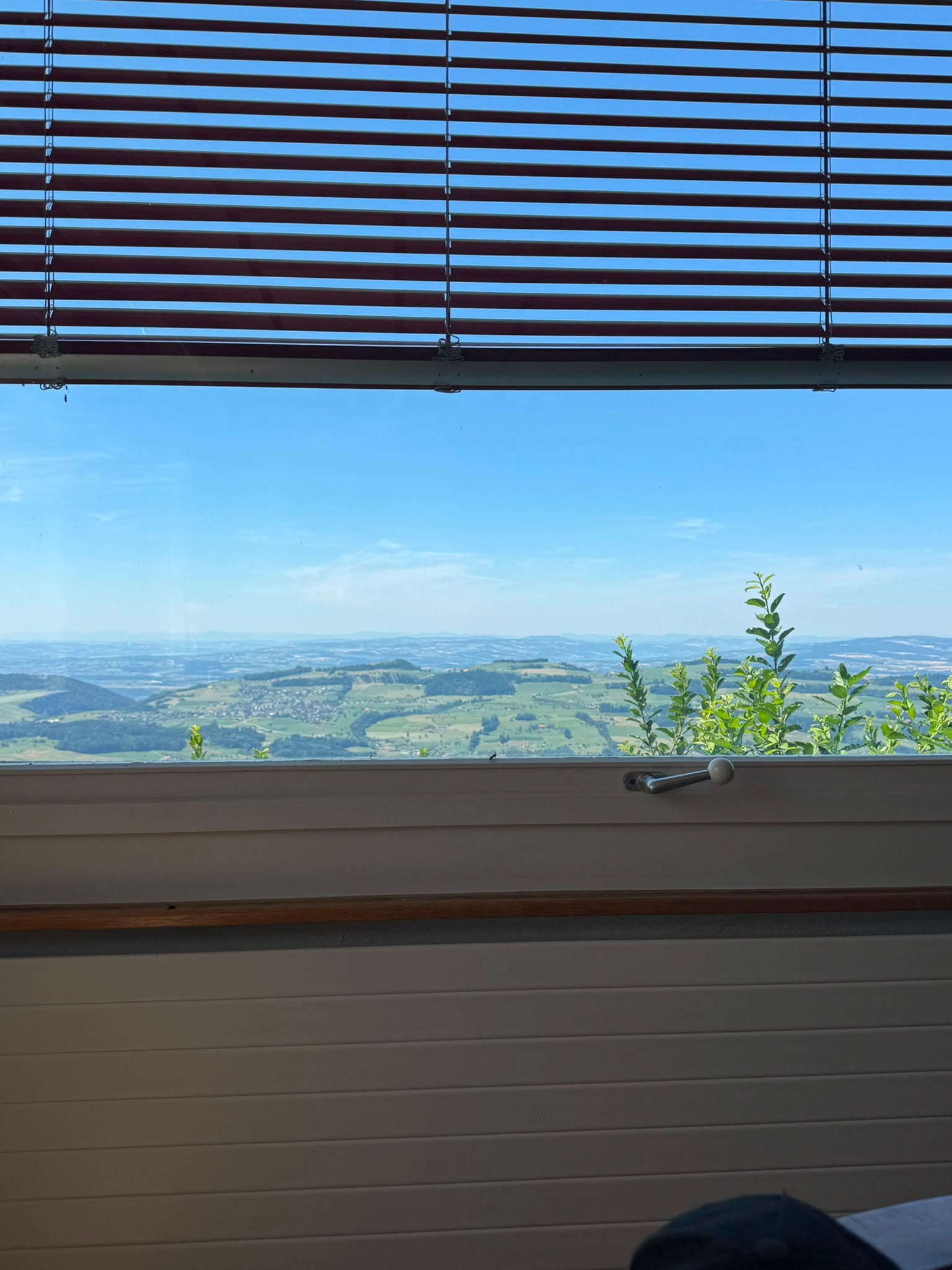
In each of the above examples, silly as they are, I imagine that, for a brief moment, a group brings a miniature institution or social form into existence, thereby creating something larger than the sum of its individual human parts. What a wonderful thing, even for a moment.
So, if Liar’s Poker taught players blustering and wagering attitude of Wall Street, and Mafia attuned people to the cunning and personal evaluations of Silicon Valley, what games and rituals will come to be associated with a community of practice that prototyped new forms of relationality for the age of AI? What ritual will people say reinvigorated socialization, togetherness and human spirit?
We are all players in the rigorous game of living. What will be our game?
I hope you’ll add some ideas of your own to the list.